
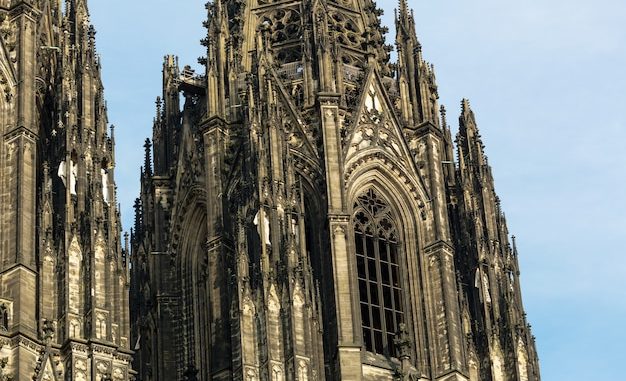
A Testament to Medieval Architectural Brilliance
Standing proudly against Antwerp’s skyline, the Cathedral of Our Lady showcases the finest examples of Brabantine Late Gothic architecture. Its seven-aisled design remains unmatched across Belgium, whilst its asymmetrical tower reaches towards the heavens at a remarkable 123 metres. The northern tower’s extraordinary height made it the tallest church tower in the Low Countries, serving as a beacon for sailors navigating the Scheldt River.
A Century-long Construction Saga
The cathedral’s construction spanned nearly 170 years, beginning in 1352 and reaching completion in 1521. This mammoth project brought together some of the finest architectural minds of the era. Jan and Pieter Appelmans laid the groundwork, establishing the fundamental design principles. Jacob van Tienen, Jan Tac, and Everaert Spoorwater each contributed their expertise, whilst the Waghemakere family played a crucial role in maintaining the Gothic aesthetic throughout the building process.
Rising from the Ashes
The cathedral’s history bears witness to significant challenges. The devastating fire of 1533 threatened to undo decades of painstaking work. Yet, the greatest test came during the Iconoclasm of 1566, when Protestant reformers systematically destroyed much of the interior artwork and furnishings. Despite these setbacks, the cathedral demonstrated remarkable resilience, emerging stronger through each trial.
Artistic Treasures Within Gothic Walls
The cathedral houses an extraordinary collection of artistic treasures. The Gothic architectural elements create a sublime backdrop for later Baroque additions, including masterpieces by Peter Paul Rubens. These artworks showcase the culmination of Antwerp’s golden age, reflecting the city’s prominence as a commercial and cultural powerhouse during the 16th and 17th centuries.
A Symbol of Maritime Heritage
Beyond its religious significance, the cathedral served as a vital landmark for maritime navigation. Its tower guided countless ships along the Scheldt River, cementing Antwerp’s position as a major European port. The building stands as a testament to the city’s medieval commercial success, with its grand scale reflecting the wealth generated through maritime trade.
Rich Historical Legacy
Within its walls, the cathedral preserves centuries of history through its tombs, artwork, and religious artefacts. Noble families chose this sacred space as their final resting place, whilst master craftsmen contributed their finest work to honour the divine. Each chapel, statue, and painting tells a story of faith, artistry, and dedication.
Modern Preservation and Cultural Significance
Conservation teams work tirelessly to maintain this architectural treasure. Their efforts ensure that future generations can experience the cathedral’s grandeur. The building continues to draw visitors from across the globe, serving both as an active place of worship and a museum celebrating Flemish cultural heritage.
The stonework reveals intricate details that showcase medieval craftsmanship at its finest. Flying buttresses support the massive structure, whilst pointed arches draw the eye upward. The extensive use of glass allows natural light to filter through, creating an ethereal atmosphere within the vast interior space.
Each chapel presents unique artistic elements, from elaborate altar pieces to detailed wood carvings. The choir stalls display masterful woodwork, whilst the organ’s pipes reach towards the vaulted ceiling. The pulpit, crafted in rich wood, demonstrates the pinnacle of Baroque craftsmanship.
The cathedral’s treasury holds precious religious objects, including medieval manuscripts, ceremonial vessels, and ancient textiles. These items provide insight into centuries of religious practice and artistic development. The collection continues to grow, with contemporary artists contributing works that complement the historical pieces.
The building’s acoustics enhance both religious services and musical performances. The space resonates with centuries of sacred music, from Gregorian chants to modern compositions. Regular concerts attract music enthusiasts, adding another dimension to the cathedral’s cultural significance.
Careful restoration work maintains the building’s structural integrity whilst preserving its historical character. Modern technology aids conservators in identifying areas requiring attention, ensuring appropriate intervention methods. This balance between preservation and accessibility allows the cathedral to serve its dual role as both religious sanctuary and cultural monument.
The cathedral’s presence in Antwerp’s central square creates a focal point for community gatherings and celebrations. Its bells mark significant moments in city life, continuing a tradition that spans centuries. The building remains central to local identity, bridging past and present through its enduring presence.
Educational programmes share the cathedral’s history with younger generations. School groups explore the architecture, artwork, and religious significance through guided tours and workshops. These activities ensure that knowledge of the building’s importance passes to future custodians.
Research continues to uncover new aspects of the cathedral’s history. Archaeologists and historians study building records, artistic documentation, and physical evidence to deepen understanding of its development. Each discovery adds layers to our knowledge of this remarkable structure.
The cathedral’s influence extends beyond religious and architectural spheres. It appears in countless artworks, photographs, and literary works, inspiring creative expression across generations. Its silhouette defines Antwerp’s identity, appearing on everything from official documents to tourist memorabilia.
Weather and environmental factors pose ongoing challenges to preservation efforts. Teams monitor the effects of pollution, temperature fluctuations, and moisture on the historic fabric. Their work ensures that appropriate measures protect vulnerable elements whilst maintaining authenticity.
Digital documentation creates detailed records of the cathedral’s current state. Three-dimensional scanning and high-resolution photography capture architectural details and artwork. These resources support both conservation work and academic study, whilst providing access to features normally beyond public view.
The cathedral demonstrates how religious architecture adapts to changing times. Modern amenities integrate discreetly with historical elements, creating a space that serves contemporary needs whilst honouring traditional functions. This evolution ensures the building’s continued relevance in modern society.


